NEW TUTORIAL: Advanced Time Freeze

Good news, the Payment Plan tutorial is now online!

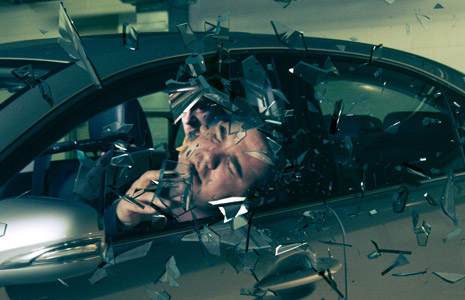
In this in-depth 30-minute tutorial, we will be adding suspended glass into a live action shot using a 3D program. This technique can be used to combine many types of 3D element or layers for infinite creative possibilities.

Watch Tutorial

I'd also like to thank our new hosting partner JX2 media for their great support and service as our tutorial demand has increased. So if you are looking for a high-level hosting service be sure to check them out.
www.jx2media.com

POSTED:
15 years ago
3D Experimental

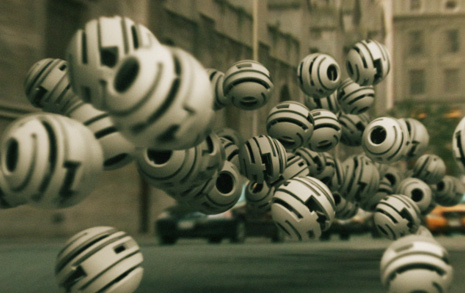
Slow news day I guess but here is another experimental project I've been working on. It was created in 3D max with a particle system randomly positioning the spikes. Rendered with V-Ray.

High Resolution Version

POSTED:
15 years ago
NEW TUTORIAL: Particle Shadows

In this EXCITING new tutorial we'll learn a powerful method for casting realistic shadows with Particular. At first we will setup a simple scene using a custom sprite and then dive in to creating the Shadow illusion. I even included a quick demo showing you how I created the future balls in 3D Max.

This handy technique finally offers a simple way to create nice looking shadows for the things your already create with Particular with an added level of realism. The shadows are dynamic and fully customizable for hard or soft looking results. I hope this helps some of you out, I know it has been a great addition to my work.

The project file is available to download using AE CS4 & Particular 2.

Watch Tutorial

POSTED:
15 years ago
More Particle Shadows in NY

What's up internet! Yesterday I made a post discussing the idea of dynamic shadows from Particles in After Effects and went on to explore render times and some pros & cons for each solution.

We got a few thoughtful comments which I felt misunderstood the intention of the post and the potential uses for casting shadows with Particular. My intention wasn't to try and replicate what a 3D program can do like ray-tracing, but instead explore the benefits of quality shadows from a particle system.

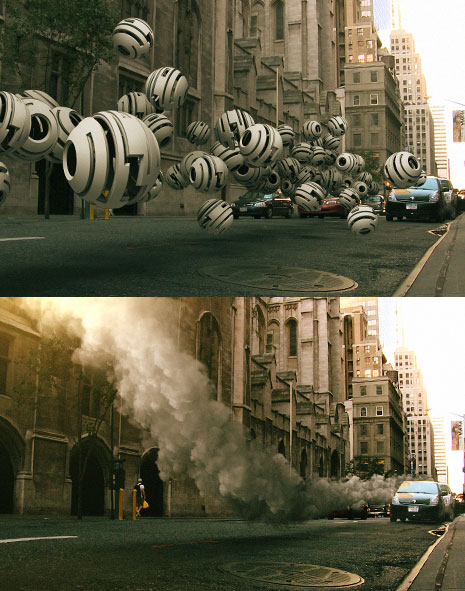
Here are a few more examples with various particle types using my dynamic shadow technique. Now, if you look at the smoke example above, notice how the shadow is darker when the stream is closer to the ground and softer as it moves up into the sky. This technique bases the shadows softness and density on the distance from the ground, just like real shadows. Plus you can control the density and softness of the shadows to fit your likings.

The example with the hollow balls was just to show a particle type that didn't have reflectivity so people would stop calling me out saying the particles don't reflect each other :)

Just like with any technique, always be thinking of ways to adapt it to your needs and explore creative uses and benefits.

See High Resolution
See Particles with no background

Stay tuned for the tutorial.

POSTED:
15 years ago
Particle Shadows AE vs 3D

After discovering an interesting way to cast shadows from Particles in After Effects I started thinking how it compares with a 3D program... One main concern was render speeds: 3D max took about 20 seconds per frame and After Effects took around 1 second but there may be other things to consider...

After Effects:
-Faster Rendering
-Depth of field renders faster
-Output quality previewing while editing (instead of 3d viewports)
-May still need a 3D program to create the sprites
-Shadows work best with round or soft type particle types
-Shadow trick requires extra setup
-Quickly Control Shadows look from soft to hard

3D Program:
- More accurate shadows
- No shadow layer setup (although AE shadows only take a couple min. to setup)
-Real 3D objects offer better reflections and self-shadows
-Access to more physics influence like deflectors etc.
-Good if you have other 3D Objects requirements for your scene
-With GI, complex scenes can get exponentially slower to render

Bottom line is there are good reasons to use both methods and depending on your project requirements or software limitations, you might be able to save some time or improve your results. Particle shadow tutorial coming soon.

POSTED:
15 years ago